

Manufacturing teams usually don’t have a shortage of content—they have the opposite problem. Product photos, spec sheets, technical documents, sales presentations, brand assets, dealer materials, training files and campaign content all have to move across teams, systems and markets.
For manufacturers, those assets often sit close to revenue-generating work: product launches, dealer enablement, sales conversations and customer-facing technical documents. Marketing needs approved images for a product launch. Sales needs the latest presentation. Dealers need region-specific materials. Product teams need technical content to stay accurate. Operations may need to know which file is current, approved and safe to share.
When those assets live across shared drives, inboxes, local folders, and one-off file links, the work slows down quickly.
That’s where digital asset management manufacturing workflows start to matter.
Quick Answer: What Is Digital Asset Management for Manufacturing?
Digital asset management for manufacturing gives teams one searchable system for approved product images, technical content, brand assets, sales materials and marketing files.
A digital asset management system helps manufacturers find the right assets faster, reduce duplicate files, control access, track metadata, support version control and share approved materials with internal teams, dealers, distributors, agencies and partners.
For manufacturers with large product catalogs, regional sales teams or complex approval workflows, enterprise DAM can help keep content accurate, current and easier to use.
Manufacturing Content Gets Complicated Fast
A single product image may support a catalog, website, sales deck, dealer portal, training guide, trade show display and social campaign. A technical document may need to stay aligned with product updates, compliance requirements or regional market needs. A brand asset may need to be shared with dealers and partners without letting outdated versions keep circulating.

Those files aren’t just “marketing content.” They’re part of how your business sells, explains, supports and protects its products.
When your team can’t find the right version, they lose time. When they use the wrong version, the problem can be bigger than inconvenience. Outdated product information, off-brand materials or incorrect technical content can create confusion for customers, partners and internal teams.
DAM solutions help manufacturers keep tighter control over product and brand content without making your team wait longer to get what they need.
A DAM Helps Teams Find the Right File Faster
Folder-based systems work until people stop remembering exactly where things live. Was the product image saved under the campaign name, product line, photographer, launch year or region? Is the approved spec sheet in the sales folder, the product folder or someone’s email?
A DAM gives your team a better way to search.
With metadata, assets can be described by product name, SKU, category, region, campaign, approval status, usage rights, language, file type or other details that matter to your business. Instead of guessing folder names, your team can search by the information they actually know.
That makes a digital asset library more useful for your marketing, sales, product, dealer and operations teams who may all need the same asset for different reasons.
Version Control Reduces Risk
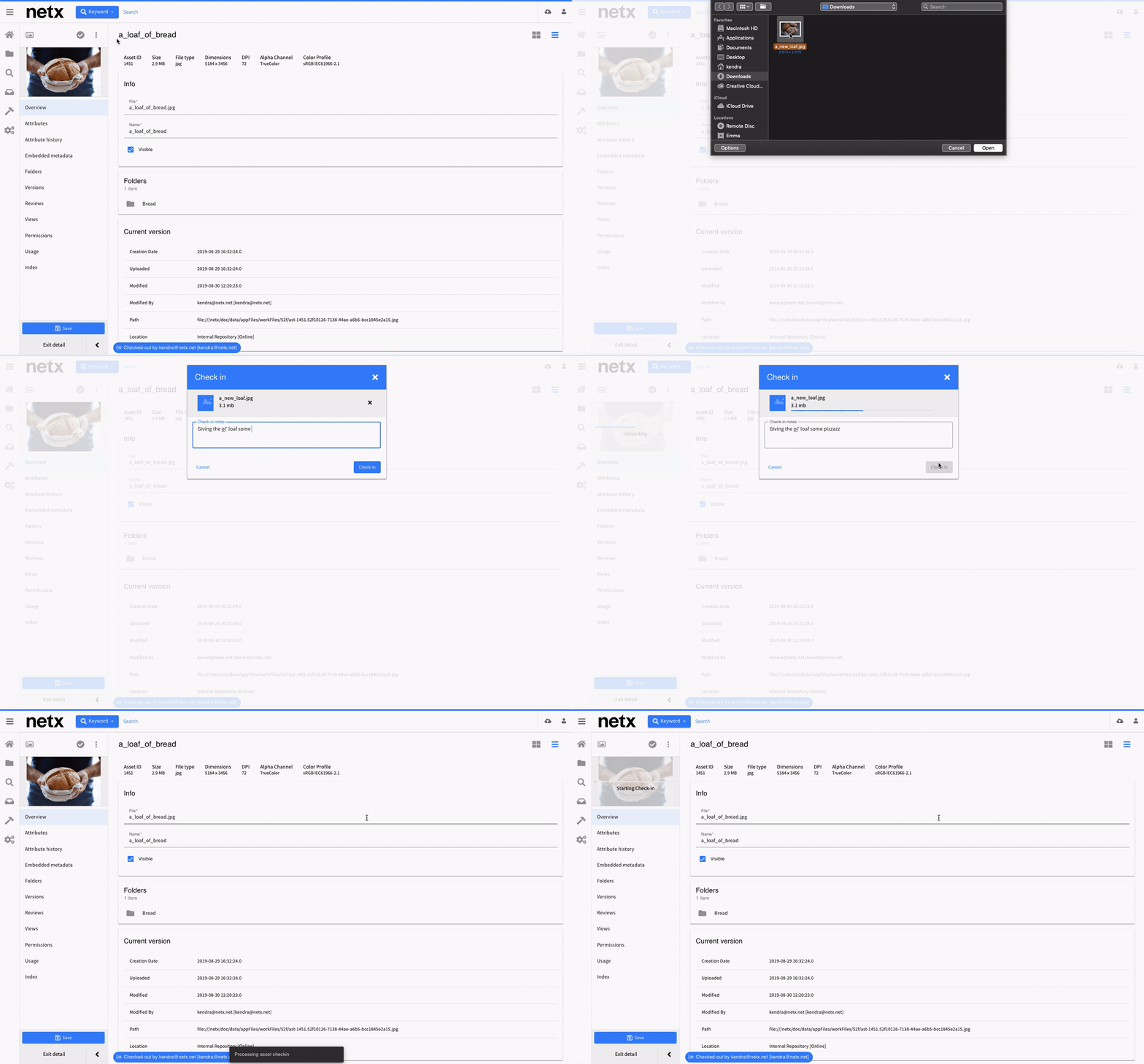
Manufacturing content changes. Products are updated. Specifications shift. Branding evolves. Markets require different materials. Launch assets move from draft to approved to archived.
Without a clear digital asset management system, your team can end up using whatever file is easiest to find, even if it is no longer current.
DAM helps reduce that risk by keeping approved assets easier to identify and outdated files easier to remove from active use. Your team can see which version is current, control who can access certain files and keep retired materials from circulating after they should no longer be used.
For enterprise DAM environments, that control becomes especially useful across larger teams, multiple regions and dealer or distributor networks.
DAM Supports Product Launches, Dealer Networks & Sales Enablement
Manufacturing content rarely stays inside one department. A product launch may require marketing copy, product photography, technical documents, sell sheets, web assets, training files and partner-ready materials.

A DAM can help your team prepare and distribute those assets from one searchable library. Marketing can work from approved brand materials. Sales can find current presentations and product visuals. Dealers and distributors can access the files approved for their market. Agencies and partners can receive the assets they need without waiting for someone to manually send files.
That kind of access helps your manufacturing team keep product and brand content moving without relying on scattered requests or repeated file delivery.
What Should Manufacturers Look for in DAM Solutions?
Not every DAM platform is built for manufacturing complexity. When evaluating DAM solutions, look for capabilities that support both day-to-day content work and long-term enterprise needs.
For larger manufacturers, it’s also worth asking how the DAM connects with the systems your teams already use, including SSO, product databases, creative tools or other enterprise platforms.
Important DAM capabilities for manufacturing include
- Searchable metadata for products, campaigns, regions and asset types
- Version control for updated product and marketing materials
- Permissions and secure sharing for internal teams, dealers and partners
- Workflow automation for approvals, updates and content distribution
- Ability to handle and repurpose high-resolution product images, technical documents, sales materials and brand assets
- Branded portals for dealer, distributor or partner access
- Open API and integration flexibility for connecting the DAM with your existing business systems, SSO and other enterprise tools
- Scalability for large asset libraries, multiple users and growing content needs
The right digital asset management system should help your team work faster while giving everyone more confidence that the files they use are current, approved and accurate.
Digital Asset Management for Manufacturing FAQs
What is digital asset management for manufacturing?
Digital asset management for manufacturing is the process of storing, searching, controlling and sharing approved product images, technical documents, brand assets, sales materials and marketing content in a DAM system.
Why do manufacturers need DAM?
Manufacturers often manage large volumes of product and marketing content across teams, regions, dealers, and partners. DAM helps reduce duplicate files, improve search, protect brand consistency and make approved assets easier to distribute.
How does DAM support sales and dealer teams?
DAM gives sales teams, dealers, and distributors easier access to approved product photos, spec sheets, presentations, training files and brand materials. Branded portals can also help external partners find up-to-date content without relying on manual file requests.
Is enterprise DAM important for manufacturing?
Enterprise DAM is useful for manufacturers with large asset libraries, multiple departments, regional teams, dealer networks or complex approval needs. It helps support scale, permissions, metadata, workflow automation and long-term content governance.
Choosing a DAM for Manufacturing
For manufacturing teams, digital asset management is not just about storing files. It’s about making sure the right people can find, use and share the right assets with less friction and more confidence.
If your team is comparing DAM solutions, the Digital Asset Management for Manufacturing Buyer’s Guide can help you evaluate the features, workflows and enterprise DAM capabilities that matter most.
For a real-world example, see how Daimler Trucks North America uses NetX DAM to support enterprise manufacturing workflows, including secure access and SSO.
Want to see how NetX could support your team? Schedule a personalized demo.
Why Higher Education Needs Digital Asset Management

Why Fashion Brands Need Digital Asset Management